

AI in the Physical World: The Challenge of Bringing Artificial Intelligence into the Heart of Industry
Artificial Intelligence is no longer a competitive advantage simply because it exists within a company’s organizational structure. Today, almost every organization has some form of data-driven development in place. The real strategic difference emerges when conditions are no longer ideal: when data is incomplete, legacy systems fail to communicate with each other, and the environment leaves no room for error.
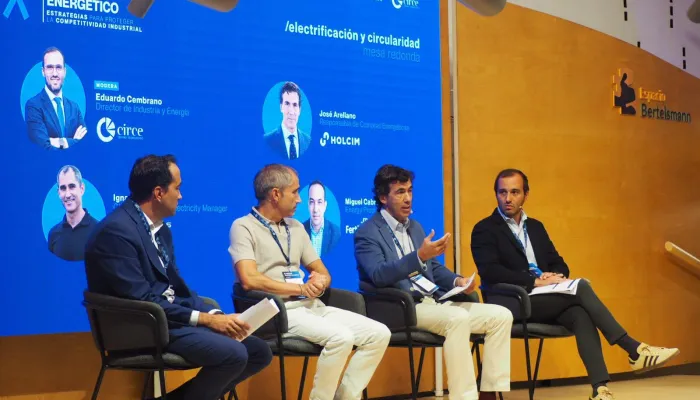
As Eduardo Cembrano, Director of Industry and Energy at CIRCE – Technology Center, explains, AI in industry must evolve from an exploratory investment into a tool for real efficiency—precisely at the moment it becomes fully embedded in day-to-day operations.
“The advantage is no longer in developing AI, but in making it truly work on the plant floor, in production mode.”
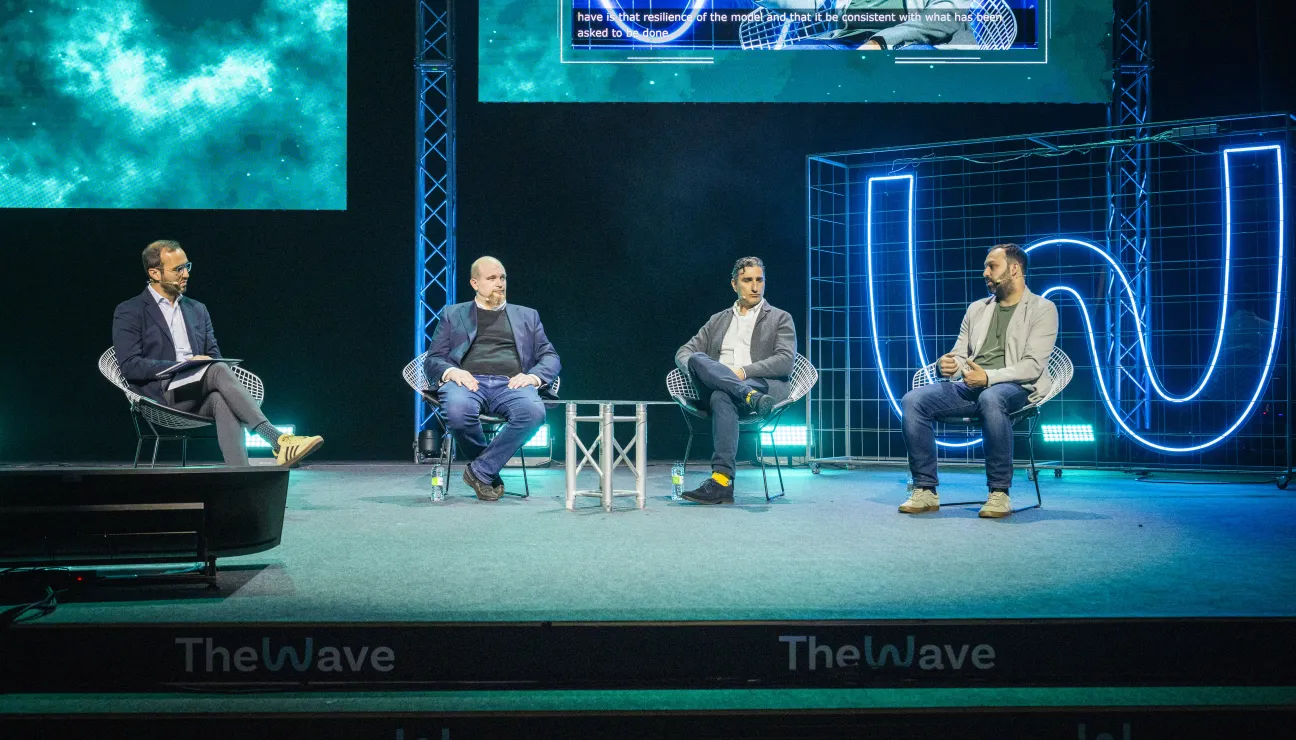
With this premise, CIRCE will bring this critical discussion to the main stage at The Wave on April 15 at 12:45. In the roundtable session “AI in Industrial Mode: Algorithms and Agents in the Physical World”, leaders from leading companies such as Airbus, Repsol, and Valoriza will join Cembrano to explore how technology is being transformed into a tangible operational asset.
The focus will not be on the theoretical power of code, but on the challenges that define the transition to production: technological integration, system governance, and safety in high-demand environments.
The challenge of integration and operational robustness
In the industrial sector, the mathematical model is rarely the main issue. The real obstacle that holds back most projects arises later: connecting the solution to existing machinery and control systems on the plant floor.
It is essential to ensure that systems perform just as reliably in production as they do in pilot phases, while also guaranteeing that every AI-driven decision is traceable and auditable.
This transition to real operations is further shaped by increasingly strict regulatory and safety frameworks. It is not enough for a solution to work under ideal conditions; it must respond consistently to technical disruptions or sudden changes in the supply chain, always complying with European regulations.
As Cembrano points out:
“The current challenge lies in integrating these models and making them robust—a barrier faced by many companies with strong technological capabilities, but without a clear path toward physical, day-to-day implementation.”
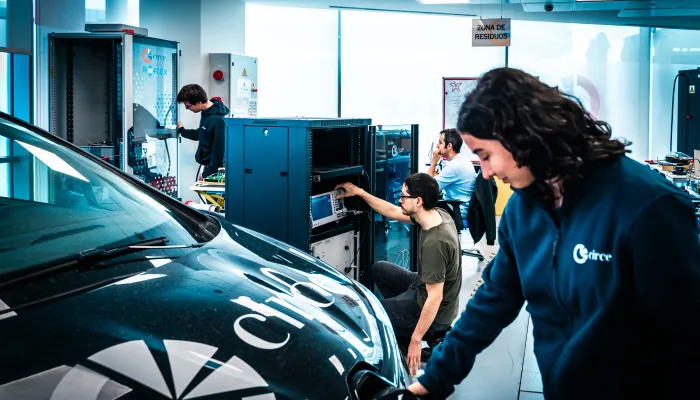
CIRCE develops AI solutions to improve industrial processes in real time
To demonstrate that applied AI is already a reality, Jesús Torres, Head of CIRCE’s Digital Transformation Group, will present at The Wave some of the results achieved במסגרת the ALL4Zero initiative.
The project addresses a critical challenge in the circular economy: replacing fossil fuels with waste materials such as plastics, wood, and paper. The difficulty lies in their high variability—one batch may be very влажный, while the next may be highly flammable.
Until now, industrial furnaces have operated reactively, adjusting parameters only after detecting efficiency drops or emission peaks.
CIRCE’s technology enables a predictive approach, effectively allowing operators to “see” the immediate future of the furnace. Using hyperspectral cameras and artificial intelligence, the system analyzes the material as it moves along the conveyor belt, before combustion. Within milliseconds, it predicts key properties such as calorific value with an error margin below 10%.
This transforms a chaotic mixture into what can be described as “smart fuel.” By knowing the material’s properties in advance, the furnace control system can anticipate and adjust parameters—such as oxygen levels or feed rate—before the waste reaches combustion.
Trained with samples from Holcim, Urbaser, and ArcelorMittal, this development brings waste-based combustion closer to the stability and performance of gas and coal, but in a far more sustainable way.
Talent and culture: “All in. A commitment to AI”
Bringing AI into real operations is not just about algorithms—it is fundamentally about people.
This is the idea that Sara Olivera, Director of People and Finance at CIRCE, will also highlight at The Wave in her talk: “CIRCE AI Olympiads: the internal talent initiative that took AI from Aragón to Silicon Valley.”
She will explain how internal talent is the true driver behind scaling these solutions.
This vision stems from the success of CIRCE’s first AI Olympiads, a recent initiative involving more than 100 professionals from the center, who developed 15 projects later presented at the Ai4 forum in Las Vegas—one of the world’s leading events in applied AI.
This journey has also led to the documentary “All in. A commitment to AI”, which will premiere במסגרת The Wave. The film follows the teams from CIRCE’s offices and laboratories in Zaragoza to the United States, reinforcing a key idea: technology only creates impact when combined with a corporate culture focused on execution.
CIRCE: where artificial intelligence delivers real impact
In a context where artificial intelligence is becoming increasingly widespread, the real differentiator is not simply using it, but making it work in complex environments and deliver tangible results.
At CIRCE, we work to ensure that AI becomes an integral part of industrial operations, improves process efficiency, and contributes to a more sustainable energy transition.
Because the true value of artificial intelligence lies not in the algorithm itself, but in its ability to transform reality.
Other related news