

Water footprint: why using less water is no longer enough
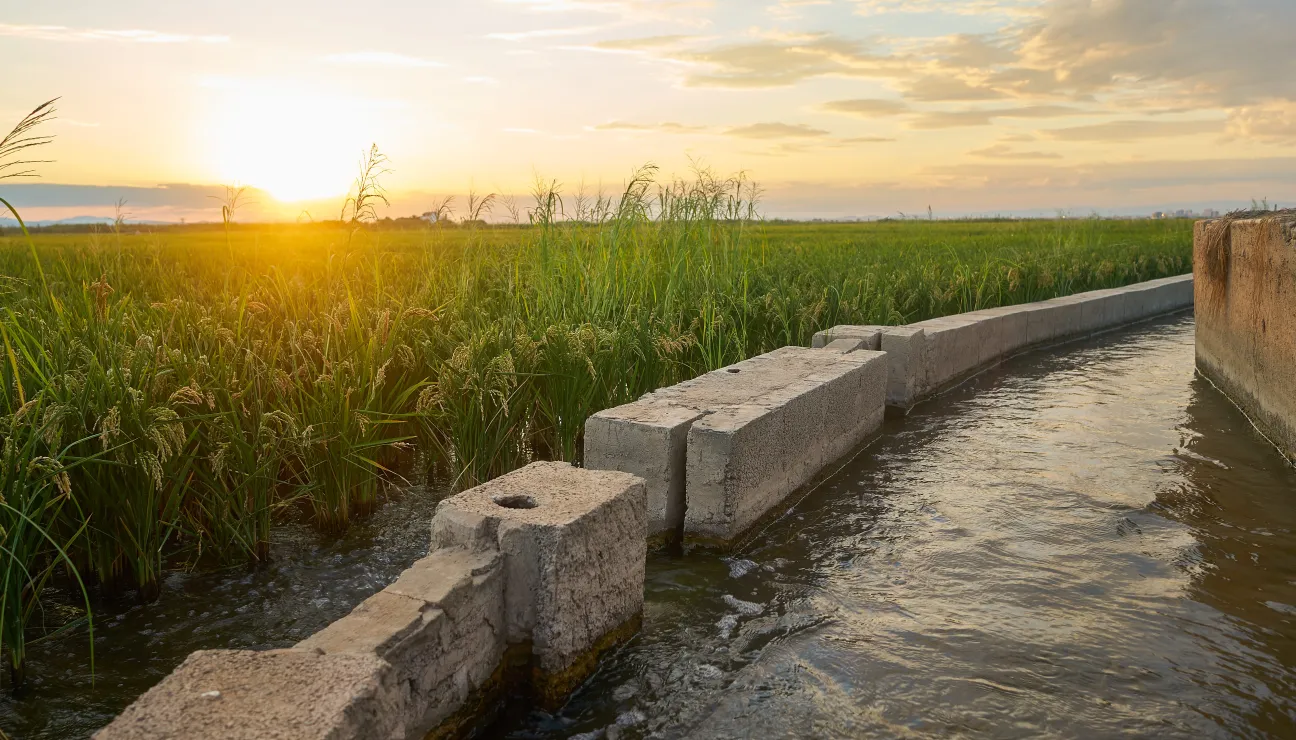
At a factory, a food-processing plant, a municipality, a tourism business, or a wastewater treatment plant, water availability shapes production, costs, environmental permits, and the continuity of operations.
AT CIRCE, WE HELP INDUSTRY, MUNICIPALITIES, WASTEWATER TREATMENT PLANTS, AND THE TOURISM SECTOR REDESIGN THEIR WATER CYCLE BY COMBINING LABORATORY WORK, PROCESS ENGINEERING, AND TECHNOLOGY VALIDATION.
The water footprint doesn't fit on a meter
What is the water footprint? It is the volume of freshwater that an activity, product, or organization consumes or pollutes throughout its life cycle, including direct and indirect water use and the pressure it places on the river basin where it is located. It isn't just a consumption figure: it is an indicator of water, regulatory, and cost risk.
Reducing the water footprint to the volume abstracted is a useful simplification to start with, but insufficient for decision-making. ISO 14046 sets out its assessment from a life-cycle perspective for products, processes, and organizations. In practice, it requires considering how much water is used, where and when it is used, what pressure exists on the basin, and how the activity affects the quality of the resource.
A cubic meter doesn't carry the same risk in a basin with stable availability as in one subject to recurring drought. Nor is returning water with a high pollutant load equivalent to regenerating it for a compatible use. That's why the water footprint should help locate critical points, not just produce an aggregated indicator.
The key is connecting that diagnosis with circularity strategies capable of translating the data into decisions: avoiding consumption, separating streams, reusing water under quality criteria, recovering materials, and comparing alternatives from a technical, environmental, and economic standpoint.
The goal isn't to maximize reuse at any cost. It's to use each quality of water for the right purpose, with the lowest overall impact and controlled risk.
This changes the question. It's no longer enough to know how much water an organization consumes or whether it meets a discharge limit. The question is how to design a water cycle capable of consuming less, reducing pollutant load, operating with lower specific energy, minimizing sludge generation, and recovering value in the form of reclaimed water, nutrients, energy, or valorizable by-products.
What forces action: scarcity, regulation, energy cost, and operational risk
The pressure is already structural. In 2023, water scarcity affected 28% of European Union territory for at least one season of the year. At the same time, the European regulatory framework is entering a new phase: it broadens treatment obligations, strengthens the treatment of nutrients and micropollutants, introduces energy targets, and drives reuse and resource recovery.
The EU Directive 2024/3019 on urban wastewater treatment has been in force since January 2025 and must be transposed before 31 July 2027; in Spain, the draft transposition bill has been under public consultation since June 2026. It extends its scope to smaller agglomerations, tightens control of nutrients and micropollutants, introduces an energy-neutrality pathway for the sector, and strengthens the reuse and recovery of resources from sludge. Royal Decree 1085/2024, for its part, sets out Spain's quality and risk-management requirements for reclaimed water. Neither regulation mandates a specific technology: both mandate a more complete way of deciding.
Beyond discharge quality, specific energy consumption, emissions, and process operating stability increasingly matter: a treatment plant or industrial facility that doesn't control these factors pays the price in its energy bill, in compliance risk, and in unplanned shutdowns.
Industry and food processing
In industry and food processing, water is rarely a single bill: it's consumption, pollutant loads, and campaign-driven peaks that overlap with the energy bill. When both variables are managed separately, it's easy to save water and worsen energy use, or vice versa.
Municipalities
Urban water management gains value when it stops treating sanitation, stormwater, green space, and climate adaptation as separate issues. Networks, storage, permeable pavements, retention areas, wetlands, and reuse for non-potable urban uses can all be part of the same strategy.
In smaller towns, extensive solutions can reduce complexity and energy consumption, provided there is available land, an appropriate design, and real maintenance capacity.
Tourism and hospitality
The tourism sector shows a consumption pattern very different from industry or municipalities: intense seasonal peaks, variable occupancy, and water demand concentrated in a few months of the year, especially in coastal destinations already under seasonal water stress.
Royal Decree 1085/2024 explicitly enables the use of reclaimed water for irrigating green areas and other recreational uses, provided quality requirements and the corresponding Risk Management Plan are met. This opens up a concrete path: replacing mains water with reclaimed water, easing pressure on conventional resources during peak season.
Wastewater treatment plants and utilities
The new framework requires looking beyond analytical compliance: aeration, pumping, sludge management, biogas production, renewable generation, and the water quality needed for reuse are starting to be assessed jointly.
Digitalizing isn't about adding sensors either. It's about using data to adapt operations to real loads, anticipate deviations, and reduce energy use without compromising effluent quality.
Do any of these challenges sound familiar for your industry, municipality, or treatment plant? Let's talk about your specific case.
Diagnostic methodology: water balance, load characterization, quality by use, and comparable indicators
The common mistake is treating each objective separately, or adding a treatment stage at the end of the line without redesigning the system: it may solve the regulatory parameter, but it can also increase electricity consumption, reagents, sludge, or operational complexity. Before sizing anything, it's worth analyzing which loads can be avoided at the source, which streams should be segregated, which water can be reused without unnecessary treatment, and which by-products can be recovered — evaluating the system through water and pollutant mass balances, specific energy consumption, emissions, waste, and life-cycle cost.
At an industrial or food-processing plant, mixing effluents of different quality can destroy opportunities for recirculation. In a municipality, routing clean stormwater into a combined sewer can overload collectors and treatment plants. At a treatment plant, operating with fixed setpoints under variable loads can increase aeration and destabilize the process.
1. Build the water balance. Locate consumption, losses, and critical points of footprint, cost, and supply risk.
2. Characterize flows and COD, BOD5, TSS, nutrients, salinity, conductivity, and load variability. Include seasonality, campaigns, rainfall, start-ups, shutdowns, and quality variations.
3. Define the quality required for each use. Establish safety barriers, risk-management criteria, and operating conditions.
4. Compare scenarios using the same indicators. Evaluate conventional, nature-based, and hybrid alternatives based on CAPEX, OPEX, energy, reagents, sludge, footprint area, emissions, robustness, and future compliance.
Recommended indicators. Compare m³ saved, kWh/m³ treated, kg of COD removed, kg of N and P recovered or removed, kg of dry sludge generated, kg CO₂e/m³, €/m³ treated, area required, operational complexity, and robustness under load variation.
5. Validate before scaling up. Use laboratory tests, jar tests, biodegradability trials, pilots, or demonstrators when uncertainty exists, and design monitoring, maintenance, and performance acceptance criteria from the outset.
The wrong project starts by asking which equipment to buy. The right one starts by identifying what function the system needs to fulfill and where value is being lost.
The right question isn't which technology removes a pollutant, but which combination of treatments — pretreatment, biological treatment, physical separation, membranes, oxidation, disinfection, wetlands, or a polishing stage — reduces the impact of the whole system and maintains robustness under real variations in flow and load.
Solutions as tools: what gets chosen, and why
Once the system has been characterized, the following options aren't mutually exclusive alternatives or a fixed hierarchy: they are tools that get combined or ruled out depending on the overall impact, life-cycle cost, and operational robustness each case requires.
Reuse: it's not about recirculating just any water
Reuse can reduce dependence on conventional resources and improve resilience to drought, but it requires precisely defining the end use. Royal Decree 1085/2024 strengthens Spain's approach based on required quality and reclaimed-water risk management.
In industry and food processing, certain auxiliary uses, initial cleaning stages, cooling, irrigation, or industrial services can accept reclaimed water, provided quality specifications, safety barriers, operating limits, and monitoring plans are defined. Not all streams need the same treatment, and not all uses require water of the same physicochemical, microbiological, or operational quality.
There are also physical limits:
- Closed loops can concentrate salts, organic matter, or inhibiting compounds.
- Membrane treatments can shift the problem toward energy consumption and brine management.
- A technically feasible solution can stop being competitive if its life-cycle cost isn't compared.
That's why reuse should be designed backward from the water's destination: required quality, potential exposure, multiple barriers, necessary treatment, storage, operational control, analytical monitoring, and response to deviations. The goal isn't to maximize recirculation, but to guarantee safe, stable use with the lowest overall impact.
Constructed wetlands: low energy doesn't mean low engineering
Constructed wetlands use the interaction between vegetation, substrate, and microbial communities to transform or retain pollutants. They are a well-established nature-based solution for certain uses, particularly in small agglomerations, decentralized systems, and polishing treatment for already-treated effluents.
Their appeal is obvious: they can operate with reduced energy consumption, buffer load variations, and provide additional benefits such as landscape integration, hydraulic retention, and biodiversity. But they are not decorative gardens, nor a universal solution. When properly sized, constructed wetlands also compete on economic and environmental grounds:
- In small urban agglomerations, their operating and maintenance costs tend to run well below those of an activated sludge system — in many cases, less than half — thanks to minimal or zero energy consumption and the absence of chemical reagents.
- Their carbon footprint follows the same logic: far lower than activated sludge, and even further below advanced intensive systems.
- In food-processing and winemaking applications, the same pattern holds: high, consistent removal efficiencies for COD, BOD₅, and suspended solids, with operating costs 80–90% lower than activated sludge and a carbon footprint several times smaller.
Performance depends on several design and operating factors:
- Average and peak flow, organic load, nutrients, seasonality, and temperature.
- Hydraulic load, retention time, flow distribution, and the risk of hydraulic short-circuiting.
- Substrate type, grain size, root development, clogging, and maintenance.
- Pretreatment, target effluent quality, available area, and operating conditions.
Ignoring these conditions can turn a low-energy solution into a low-performance installation.
In many cases, the most robust response is hybrid: conventional pretreatment to protect the system, a wetland for polishing and load buffering, and monitoring to verify performance.
A nature-based solution is still critical infrastructure. It needs proper sizing, control, and an operating plan.
Sludge: minimizing it isn't the same as displacing the problem
Another common mistake is talking about eliminating sludge when, in reality, its location is changed or the problem is diluted. Minimization starts before the sludge exists: by avoiding loads at the source, separating incompatible streams, optimizing reagent dosing, and stabilizing biological operation.
After that, the route depends on scale and composition. In small treatment plants, reed beds can combine dewatering and stabilization with little energy. In larger facilities, anaerobic digestion, biogas recovery, phosphorus recovery, efficient drying, or other by-product and waste valorization routes can make sense.
The right technology isn't decided by trend, but by mass balance, dry-matter content, volatile organic matter, biological stability, nutrient content, presence of metals or emerging contaminants, sanitization requirements, destination market, regulatory framework, and life-cycle cost.
Circularity doesn't mean calling any waste a resource. It means demonstrating that a safe, stable, and technically viable outlet exists.
The right technology is never chosen by trend: it's chosen by comparing these options under the same indicators — m³ saved, kWh/m³ treated, kg of COD or N and P recovered, kg of sludge generated, kg CO₂e/m³, €/m³ treated, and robustness under variation — until finding the combination that solves the whole system, not just the most urgent point.
From treating for discharge to regenerating resources
Wastewater treatment can no longer be understood solely as the last step before discharge. It is infrastructure capable of regenerating water, recovering energy and nutrients, and reducing exposure to water scarcity.
That doesn't mean every plant should adopt the same model, or that nature-based solutions should fully replace conventional technologies. It means the decision must consider the full cycle, and that, often, the most robust answer will be hybrid: part process, part nature, part digital control.
At CIRCE, we address this challenge by combining analytical characterization, water and mass balances, process analysis, energy efficiency, circularity, techno-economic evaluation, and technology validation. The goal isn't to prescribe an off-the-shelf technology, but to reduce uncertainty and design solutions that work in real operation.
If your organization is reviewing its water consumption, its treatment system, or its reuse and valorization options, tell us about your challenge and we'll analyze it with our technical team. We start with an initial technical conversation, at no cost and with no obligation, to assess together whether it's worth moving forward.