

CIRCE Hits 100 Horizon Europe Projects and Helps Drive Nearly €912 Million in European Innovation
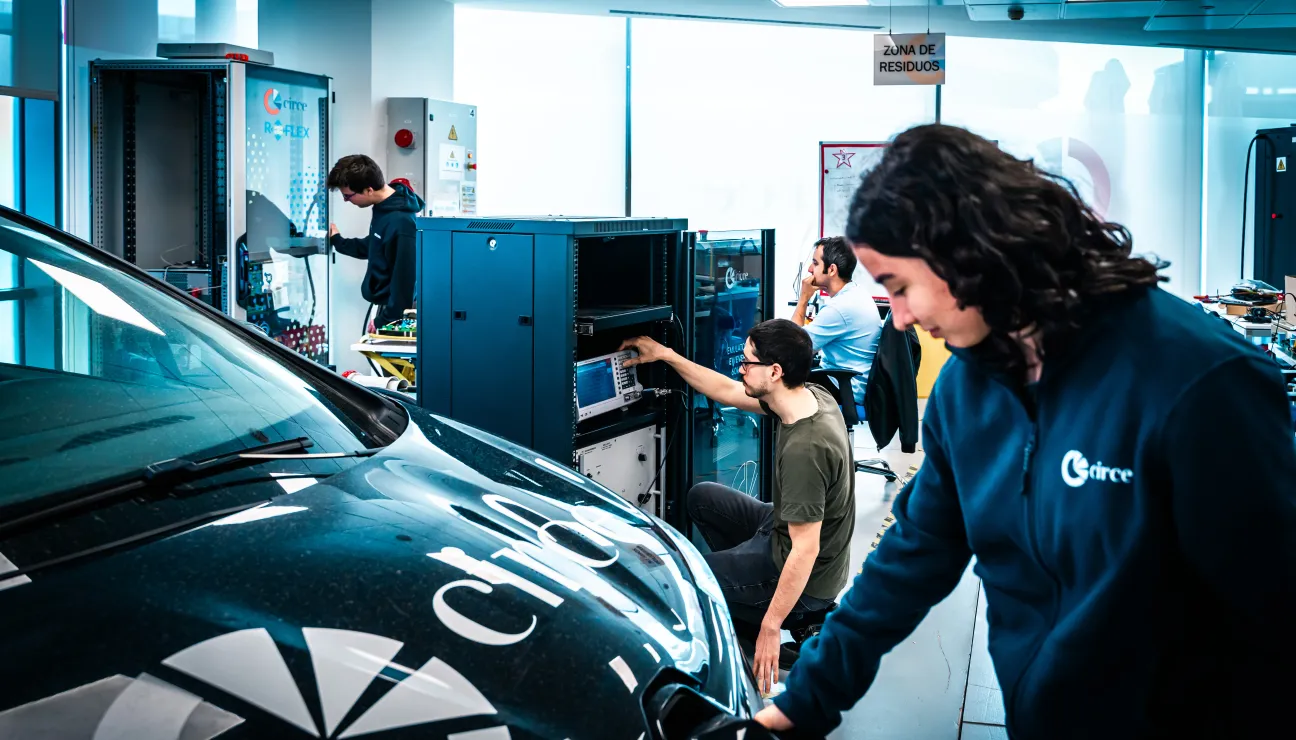
CIRCE Technology Centre has reached its 100th project funded under Horizon Europe, the European Union’s flagship research and innovation programme. This milestone consolidates CIRCE’s position among Spain’s most active organisations in securing competitive European funding and reinforces Aragón’s role as a benchmark region for the development of technologies supporting the energy transition, digitalisation and industrial decarbonisation.
Since the launch of Horizon Europe in 2021, CIRCE has participated in 100 European projects, generating a cumulative return of €57.3 million. Every euro secured by CIRCE translates into approximately €16 of R&D investment mobilised across Europe. These projects are part of international consortia representing a combined budget of €911.9 million and €788.4 million in European funding. CIRCE has also coordinated 27 of these initiatives, placing it among the organisations with the strongest capacity to lead large-scale international innovation projects.
Beyond the figures, this achievement reflects CIRCE’s contribution to addressing some of Europe’s most pressing technological and societal challenges, from the large-scale integration of renewable energy and the digitalisation of power grids to the application of artificial intelligence in the energy transition.
"Reaching 100 Horizon Europe projects demonstrates that from Aragón we can drive technological solutions capable of addressing some of Europe’s major challenges. Behind every project lies knowledge, international collaboration and new opportunities for companies and industry," says David Rodríguez, CIRCE’s Director of Funding and Technology Transfer.
A Tangible Return for Aragón
CIRCE’s participation in Horizon Europe has enabled 41 organisations from Aragón, including 22 companies, to take part in European R&D&I projects. Together, these organisations have secured €20.5 million in funding, with €10.85 million awarded directly to companies. This multiplier effect has helped attract investment, stimulate economic activity and connect Aragón’s innovation ecosystem with Europe’s leading research and innovation networks.
GRIDFFIN: The 100th Project, Designed to Prevent Future Blackouts
CIRCE’s 100th Horizon Europe project is GRID-Forming Technologies for Interoperable European Grids (GRIDFFIN). Coordinated by CIRCE, the initiative addresses one of the key challenges facing the European power system: ensuring grid stability in the context of growing renewable energy penetration and increasing electrification of demand.
Indeed, the project tackles the same technical issue that contributed to the Iberian blackout of April 2025: the loss of inertia and short-circuit strength in an electricity system that is becoming increasingly dependent on renewable generation.
With a total budget of €12.35 million, nearly €10 million in European funding and 29 partners from 11 countries, including Hitachi Energy Power Conversion Solutions as the Spanish industrial partner, GRIDFFIN will develop advanced grid-forming technologies designed to enhance the stability and resilience of Europe’s electricity system. The solutions will be validated through four real-life demonstrators located in Ukraine, Greece, Italy and Türkiye.
The Ukrainian pilot is particularly significant, as it will test European grid stability technologies in an electricity system operating under extreme conditions and sustained attacks, highlighting the strategic importance of resilient energy infrastructure.
"The fact that our 100th project is also a CIRCE-coordinated initiative focused on one of Europe’s major energy challenges reinforces the technology centre’s leadership in the field of future electricity grids," Rodríguez adds.
Technologies Transforming Industry and the Energy System
One of the most valuable outcomes of CIRCE’s participation in Horizon Europe is its ability to transform research into industrially applicable solutions. These range from process electrification and renewable fuel production to carbon emissions valorisation and the digitalisation of energy infrastructures.
Projects such as eLITHE are already demonstrating three electric furnaces in real industrial plants, with the potential to avoid more than 97,000 tonnes of CO₂ emissions and 505 GWh of natural gas consumption annually for each unit replaced. ALCHEMHY is developing processes to produce ammonia and methanol without natural gas, with UBE Corporation Europe already identified as an industrial off-taker. ZHYRON is working with ArcelorMittal to recover iron and zinc from steel industry residues using renewable hydrogen. Meanwhile, CERNET converts biogenic emissions into high-value products ranging from cosmetics to packaging materials, validated alongside Bodega Matarromera and Aragón-based Tecnopackaging.
These initiatives are complemented by other projects set to shape Europe’s future energy and industrial landscape, including SSTAR (solid-state transformers), CAPTUS (conversion of industrial emissions into energy carriers), ODYSSEV (on-board power electronics for electric vehicles), NEXTELAR (digital intelligent substations) and SUNVIBE (grid-forming photovoltaic inverters).
Together, they demonstrate how collaboration between research organisations and industry can accelerate the commercial deployment of innovation, strengthen industrial competitiveness and advance the transition towards a more sustainable economy.
"Technology transfer is not measured by a single project, but by whether companies come back. We have several examples of companies that have collaborated with us repeatedly and have successfully scaled their technologies into new industrial sectors. That is the clearest proof that what we develop in these projects has real industrial application and long-term potential," Rodríguez concludes.
Aragón: A Gateway to Europe
At a time when accelerating the energy transition has become an economic and strategic priority, CIRCE will continue to drive high-impact international projects that attract investment, talent and knowledge to Aragón, contributing to the region’s technological leadership and economic development.
Other related news